

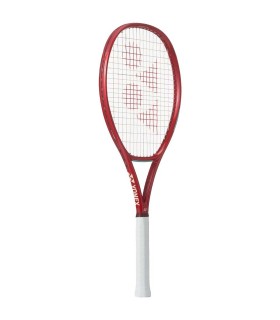
Yonex VCORE
Spin, acceleration and controlled power for producing a heavier ball at different swing speeds.
View familyCompare the four Yonex racquet families: VCORE for spin, EZONE for power and comfort, PERCEPT for precision and feel, and MUSE for smooth, accessible handling.
Four playing identities to find the right balance of power, spin, control, feel and comfort.
Spin, acceleration and controlled power for producing a heavier ball at different swing speeds.
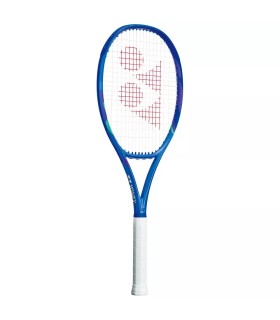
Comfortable power, a generous sweet spot and balanced response for attacking with confidence.

Control, precision and flexible feel for players who want to shape trajectories and sense the ball clearly.
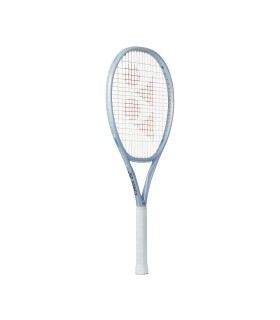
Smooth handling, comfort and accessible power for more natural and consistent rallies.
Explore the 2026 VCORE generation, available from 245 to 305 g for players seeking spin, racquet-head speed and stability on every shot.
Discover the 2025 EZONE range, with models from 245 to 305 g focused on power, comfort and a generous sweet spot for different levels.
Compare Yonex PERCEPT models from 280 to 320 g, designed around control, precision, stability and a more connected impact.
Meet the MUSE family from 265 to 295 g, developed for easy handling, comfort, stable control and a more relaxed playing experience.
Yonex tennis rackets are divided into four families with clearly different responses. VCORE focuses on spin production and racquet-head acceleration; EZONE blends accessible power with comfort; PERCEPT is built around precision, flex and feel; MUSE aims for smooth handling and an enjoyable, low-stress rallying experience.
The active Ipontennis collection contains 24 models across VCORE, EZONE, PERCEPT and MUSE. It ranges from 245-gram lightweight frames to balanced club-player options and 320-gram racquets for full, committed swings. Static weight is only one part of the decision: head size, balance, beam, string pattern and stiffness all change how a racquet prepares, contacts the ball and behaves under pressure.
Start with the on-court result you want, then adjust weight, head size and string setup. This approach is more reliable than choosing only by colour or by the model used by a professional player.
VCORE is the reference for players who want heavier rotation and higher net clearance. EZONE supplies depth and lively ball speed with a comfortable response. PERCEPT rewards self-generated pace with clearer feedback and directional control. MUSE supports easy handling and relaxed, continuous rallying.
Frames from 245 to 280 grams favour fast preparation, defence and technical development. The 285-300 gram range offers the most common club-player balance. Racquets from 305 to 320 grams add mass and stability but require earlier preparation, enough strength and sound mechanics to maintain racquet-head speed.
Strings can enhance or erase a racquet's character. VCORE needs snapback with predictable launch; EZONE benefits from a setup that controls its power; PERCEPT allows greater emphasis on feel and precision; MUSE works naturally with elastic, comfortable strings. Tension should reflect technique, playing frequency and arm sensitivity.
A direct comparison helps identify the right platform before selecting a specific model and weight.
Spin, swing speed and stability for players who shape points with heavy rotation.
View Yonex VCORE rackets →Controllable power, a generous sweet spot and comfort for easier acceleration.
View Yonex EZONE rackets →Precision, flex and feedback for players who create their own pace.
View Yonex PERCEPT rackets →Smooth handling, efficient energy transfer and comfort for natural play.
View Yonex MUSE rackets →ISOMETRIC geometry optimises the intersection of the main and cross strings to create a larger effective hitting area than a conventional round shape. From that foundation, VCORE works on speed, snapback, stability and ball hold; EZONE combines an expanded sweet spot with energy transfer and vibration control; PERCEPT uses the FLEXCON system to promote flex and pocketing; MUSE applies a structure designed for fluid motion and reduced effort.
Technology does not replace correct specifications. Two 300-gram frames may swing very differently because of balance, beam shape and mass distribution. Compare every candidate with your current racket and consider serve, return, running shots and defensive situations, not only comfortable baseline feeds.
A 98-square-inch head generally provides a more direct trajectory and asks for cleaner contact; 100 square inches add margin and versatility. Open patterns promote depth and rotation, while denser layouts control launch. Extra mass improves stability only when you can still accelerate the frame without delaying preparation.
Grip size and strings complete the system. The wrong grip makes it harder to relax the hand, and a string bed that is too stiff or too old can reduce both comfort and control. Ipontennis can connect your level, current racket, playing frequency and preferences to a suitable Yonex family, weight and string configuration.
Please sign in first.
Sign in
